
Finding St. Peters Residents
No single list covers every household in St. Peters. The useful material sits in different places, each built for its own purpose. The county assessor and its GIS tools link an address to a parcel. The Recorder safeguards land instruments. The Election Authority runs its own voter-file request route, and the library and historical society keep the older volumes. Every source offers a dated fragment rather than a full answer about a household.
Match your starting point to what you hold. An address fits the parcel map. A family name from the past may surface in a directory, an obituary, or a court index. Requests aimed at the city belong with the City Clerk. Court and police matters run through separate channels. When names repeat, or a property has changed hands, compare any result against an independent record before relying on it.
- Enter the street address in the county GIS and save the returned parcel ID, situs address, and legal description.
- Compare the owner and mailing fields, knowing that neither field establishes who occupies the address.
- Use the legal description or party name in the Recorder research path to locate recorded instruments.
- For a historical household, check the closest available directory or county phone-book year, then compare nearby years.
- Send a focused Missouri Sunshine Law request to the actual custodian when an ordinary city record is not available online.
Note: A fruitless search may reflect a restricted record, a spelling variance, or a coverage gap rather than proof that nobody lived there.
St. Peters Resident Records Offices
Resident research in St. Peters rarely stays inside one office. The City Clerk keeps minutes, code, and legal notices. St. Charles County controls the parcel and land-record routes. The Election Authority maintains the registration files. Knowing which office holds what spares you a misdirected request and explains why a deed, a parcel entry, and a voter record can each tell a different story about the same address.
St. Charles County Recorder of Deeds
201 N Second St, Suite 338
St. Charles, MO 63301
636-949-7507
St. Charles County Assessor and GIS
County mapping and parcel services
St. Charles County, Missouri
GISServices@sccmo.org
St. Charles County Election Authority
397 Turner Boulevard
St. Peters, MO 63376
636-949-7550
St. Peters Parcel Records
For a current St. Peters address, the county GIS is the best first stop. Its Assessor Lookups service includes ParcelWeb, BuildingSketches, AssessedValueHistory, parcel-similarity, and personal-property layers. A parcel result can list the situs number, owner name, mailing address, lot size, and other tax attributes. The tax-information layer goes further. It adds the account number, municipality, fire and school districts, neighborhood code, quality code, and legal description. The county assessor lookup layers display the parcel-search context behind any St. Peters residents directory check.
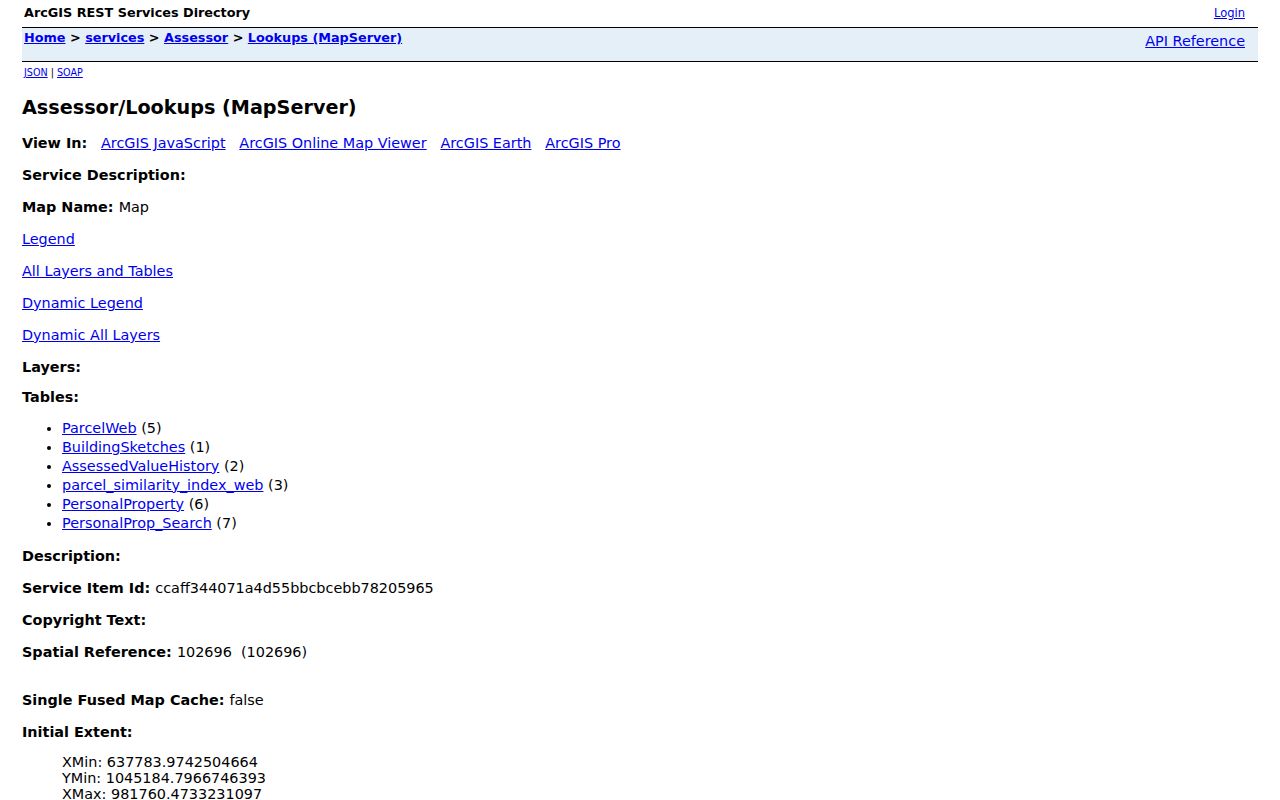
Treat the parcel ID and legal description as your bridge to the recorder's documents. The mailing address shown on a parcel screen may not be a home address at all, so rely on those two identifiers when you pull deeds and assessor records in St. Peters.
| County field or tool | How it helps a St. Peters search | Important limit |
|---|---|---|
| Situs address | Locates the physical parcel | Does not identify every household member |
| Owner and mailing fields | Provides an ownership or correspondence lead | Mailing and situs locations can differ |
| Parcel or account ID | Joins GIS, assessor, and deed work | Format details can vary by viewer |
| Identify and export tools | Review parcel and civic layers | Record the layer and search date |
St. Peters City Request Routes
The City Clerk keeps St. Peters records, Board minutes, the municipal code, and legal notices. The standard city request form asks for your contact details, a clear description of the record, a delivery choice, copy count, and a maximum fee authorization. It is built for city-held material only. Municipal court and police records sit outside that general form. Those need their own official request path. The St. Peters public-record request form shows the level of detail the city expects from a requester.
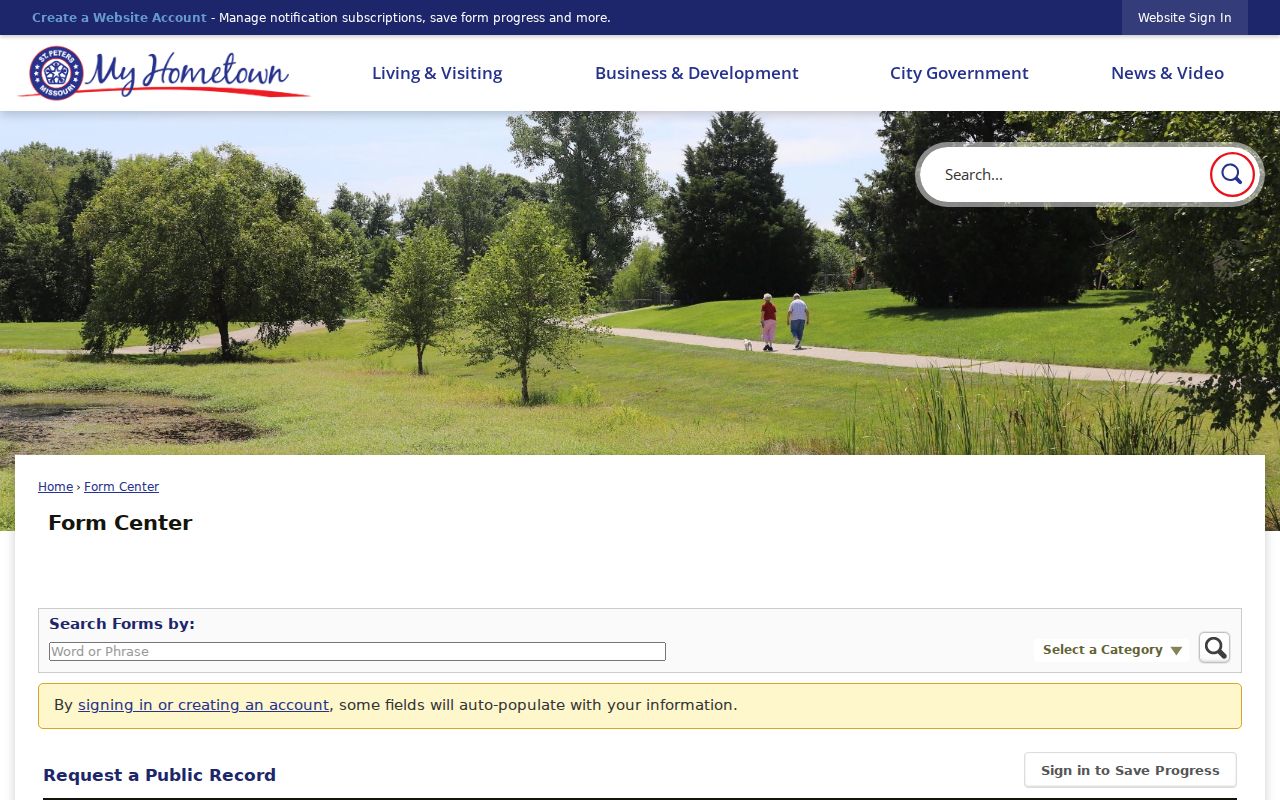
A specific name, address, date, and record type help the custodian route your request quickly. Inspection, paper copies, and electronic delivery are separate choices on the form. Missouri Sunshine Law, RSMo 610.023, sets a firm response clock. A custodian must answer as soon as possible. That answer must come no later than the end of the third business day. Otherwise the custodian must explain a delay or denial in writing. Remember that this timeline governs the response itself. It does not promise that every item you seek is open or instantly produced. The record could live in a residents directory, a voter roll, or the assessor's property rolls.
Current St. Peters Resident Rolls
St. Peters keeps no single roll of who lives in the city. What exists instead are separate official sources, each with its own purpose. The assessor provides a property snapshot for a parcel. The voter portal confirms one individual, and only when every required field is supplied. The Recorder names parties to recorded instruments. The city's subdivision trustee list can point to a neighborhood contact. Dates, access rules, and coverage differ across all of them, so a St. Peters residents directory built from these pieces is a patchwork, not a complete resident list.
| Record source | What it can show | Custodian | Access route |
|---|---|---|---|
| Assessor and GIS | Parcel, owner, mailing and site-address snapshot | St. Charles County | Public map and REST layers |
| Voter registration | Permitted registration match and county public-file fields | State and Election Authority | Exact-input portal or file request |
| Recorder index | Recorded parties, instruments, and legal descriptions | Recorder of Deeds | Office research, Tapestry, or Laredo |
| Subdivision trustee list | Ward, trustee, bylaw, or no-association label | City of St. Peters | City-maintained list |
Voter files sit closest to a true resident lookup, but the county attaches conditions. Registration records are public, though not for commercial use. Fields the county identifies include name, address, year of birth, and elections voted. The state portal takes a different route. It requires first name, last name, date of birth, the last four digits of a Social Security number, and county before it returns anything. That identity-check input should never be saved or published.
St. Peters Recorded Deed Trails
A deed trail answers a different question than a resident roll. Ownership is not the same as occupancy. The Recorder of Deeds preserves land records and other recorded instruments for St. Peters properties. Two online products serve researchers. Tapestry runs around the clock and charges per search for occasional use. Laredo suits frequent searchers through a subscription. Free research terminals sit on the third floor of the Administration Building. They are open on weekdays from 8:00 a.m. to 4:30 p.m.
Searches can run by current owner, prior owner, grantor, grantee, instrument date, or legal description. Note the document number, recording date, and document type. Follow the image or copy route to the full record. One caution from the Recorder matters here. A deed proves a conveyance, not that anyone actually lived there. For a residence question, pair the deed with another source. Use a city directory, census record, voter roll, return-address item, or newspaper source.
- Parcel
- A tax and map unit connected to a physical location and legal description.
- Index
- A finding tool that points to a recorded item; it is not always the item image itself.
- Grantor and grantee
- The party transferring an interest and the party receiving it in a recorded instrument.
- Criss-cross directory
- An address-first directory format. No separate St. Peters run was verified, so check the local catalog before relying on one.
Note: County archival guidance sends recorder records from January 1, 1970 forward to the local Recorder, while older books and microfilm may require an Archives or repository search.
St. Peters Official Name Checks
A parcel or residents-directory lead sometimes deserves a narrow follow-up through an official state tool. Missouri's Business Entity Search confirms whether an entity filing exists. The professional-registration service shows a public credential when the live result includes one. Treat a registered agent, business address, or license address as an affiliation clue only. It is not a verified home address for anyone in St. Peters. Missouri Professional Registration online services is the official starting point for public license searches. It also links to the licensing boards.
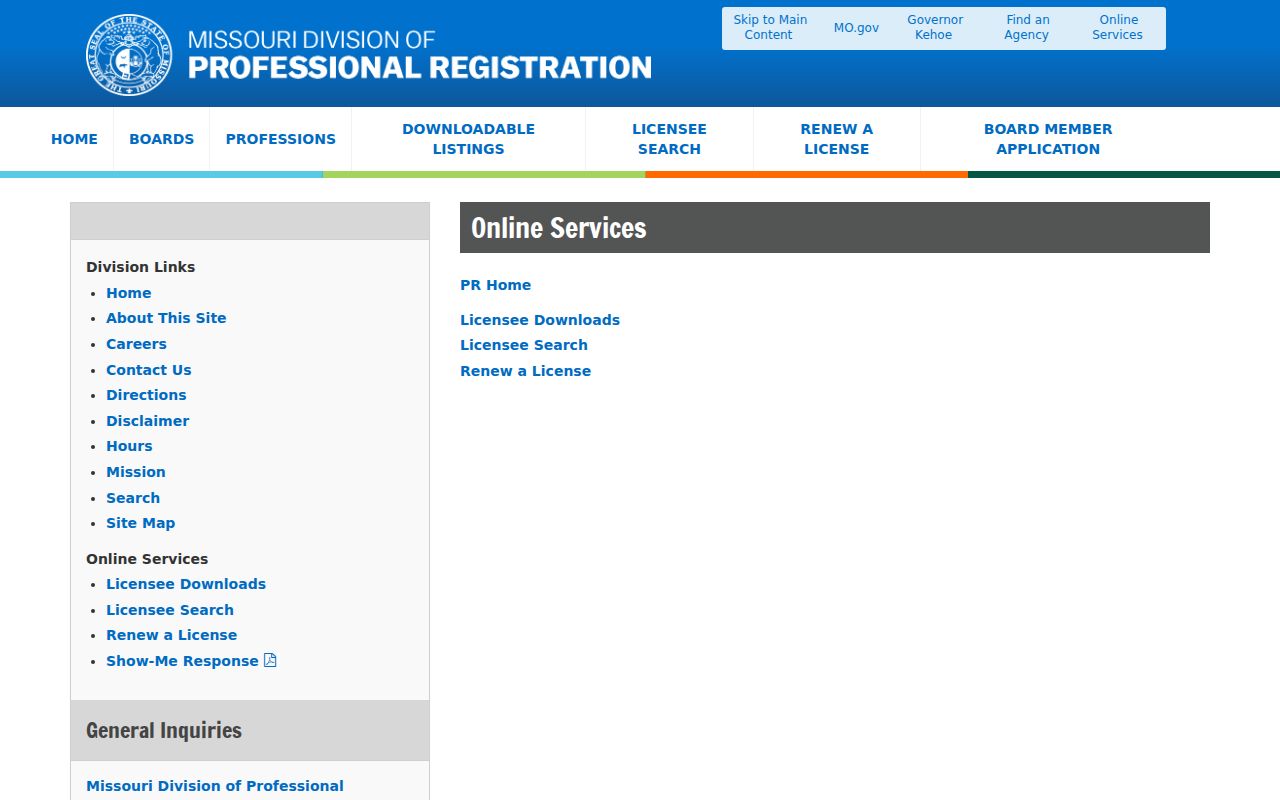
Save what the screen shows you. Keep the displayed name, license or entity number, status, and both dates. Note the source too. Never stretch a filing address into a claim that someone lives there.
St. Peters ZIP Geography
ZIP codes narrow a St. Peters address search, but they do not prove the municipal boundary. ZIP 63376 is the primary code for St. Peters City Hall, the library, and the Election Authority. Some mailing labels in town also carry 63366 or 63304. Those edge labels need address-by-address checks against USPS and the county parcel map.
USPS returns the delivery city, state, ZIP, and ZIP+4 for a street address. Compare the county municipality, parcel, ward, and precinct separately after that. A postal label, school district, and fire district can each sit on a different line of the map. So can a voter precinct and a city limit. The St. Peters ZIP code directory keeps the postal-geography side of a resident lookup apart from the address-level record trail.
St. Peters Library Directory Shelf
Older St. Peters household research often shifts from online portals to the library shelf. The St. Louis County Library holds St. Charles city directories on microfilm from 1906 and across many years from 1925 through 1959, with later print and reference volumes. A St. Charles County phone book for 1987-88 expressly includes St. Peters. That makes it the strongest late-century local directory lead for the city.
The St. Charles City-County Library genealogy resources and the St. Peters branch at 77 Boone Hills Lane offer another way in, with licensed genealogy databases on hand. Coverage still depends on each volume's geography. A St. Charles city book may omit a St. Peters household entirely. Record the volume, year, medium, page, spelling, and place coverage before drawing any conclusion about a family.
The St. Charles County Historical Society adds newspapers, maps, property and tax materials, family-history files, and photographs. Its All Saints Catholic Church burial index is especially useful for family research before statewide vital registration began in 1910. The original burial record stays with the church.
St. Peters County-Era Records
St. Peters became a town in 1910 and a fourth-class city in 1959. Earlier residents often appear under St. Charles County instead, or under a settlement name, a church, or a rural land description rather than a modern city label. The county itself was organized in 1812. The Missouri Archives guide points to an 1814 tax list, territorial censuses from 1817 and 1819, early circuit-court material, and recorder books from the territorial era.
The County and Municipal Records Database filters by county, office type, record type, keyword, city, and year range. It is browse-based rather than a full name index. It also does not represent every microfilm reel. Run St. Peters, Saint Peters, St. Charles, recorder, tax, probate, and circuit court as separate searches. A gap here is context about the tool, never a reason to assume an unlisted family was absent from the county.
St. Peters Property Record Alerts
Recorded-document research has a practical safety side for St. Peters homeowners. St. Charles County offers a free Property Fraud Alert that notifies a registrant when a document matching a name or business name is recorded. The county frames the notice as an alert only. It does not prevent fraud, authenticate an instrument, or remove a document. Compare any unexpected notice against the Recorder's official instrument details, and use the published county contact rather than a number inside an unsolicited message.
A February 2, 2026 county notary-fraud alert reported nearly 43,000 enrolled residents and businesses and more than 17,000 alerts issued, with no county fraud detected at publication. Those figures are a dated awareness statistic. They say nothing about a particular St. Peters property. The county Property Fraud Alert page carries the current enrollment and verification route.
St. Peters Resident Privacy Rules
Public access to records has firm boundaries. Vital certificates require a direct and tangible interest under 19 CSR 10-10. Missouri law can make court material confidential. The federal Driver's Privacy Protection Act limits driver-license information. The county voter-file route bars commercial use. Missouri Safe at Home gives eligible survivors a substitute address along with government-agency confidentiality protections.
When an official record is wrong, contact the office that keeps it. Bring the parcel, instrument, case, or other reference number. Ask about that office's correction or challenge process. Never try to rebuild a protected address from a substitute address or from fragments scattered across other records.
St. Peters Limited Custody Results
Missouri's official custody tools answer narrow questions. The Department of Corrections search covers active incarcerated, probation, or parole records and may include aliases, subject to safety and confidentiality exclusions. It is not a complete historical criminal record. The county Corrections page gives facility information but publishes no official public live jail-roster search. Missouri DOC Offender Search is the official entry point for the active-offender lookup.
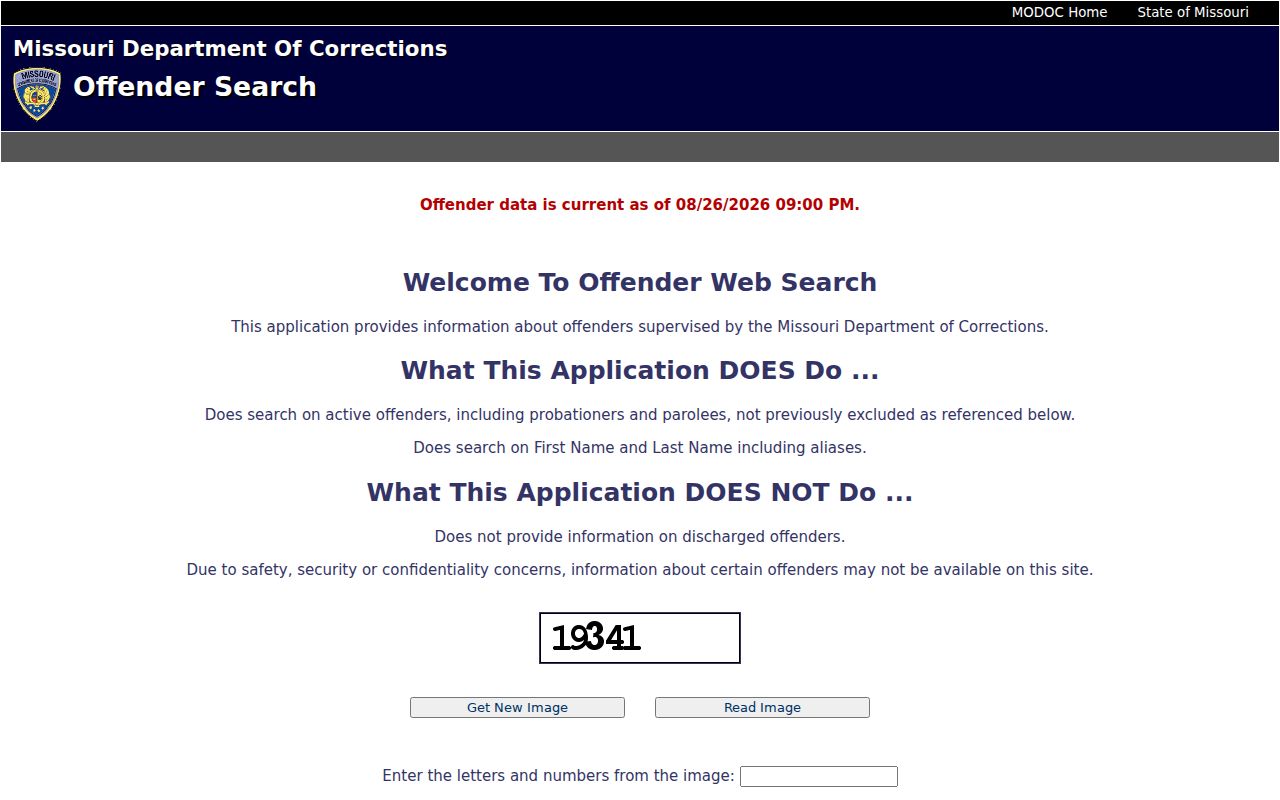
Treat a docket, custody notice, or registry entry as evidence of one thing only. Stretching a single result, or its absence, into a wider claim about a person goes beyond what the record supports.
Historical St. Peters Resident Directories
A printed directory works best as an annual snapshot. When a volume truly covers St. Peters, it can show a name, an address, a phone, an occupation, or a household note. Comparing nearby years may reveal a move, a spelling variant, or a shift in who lived at a door. Still, it is no substitute for a deed, a vital record, or a current address check. Note the publication year and the page. Directory data was often gathered before the cover date.
The 1856 Old Town deed story of Etienne Dubois is a local case in point. The North Missouri Railroad plays a part in it too. The accounts of 301 and 311 Main Street and the Gue blacksmith family show how one property narrative opens into deeds, maps, newspapers, and residents directory volumes. The full run list, shelf method, and transcription practice sit on the St. Peters city directory collections page.